Rafael HUSEYNOV
DOI: https://doi.org/10.30546/209805.2026.110.2.053
Abstract
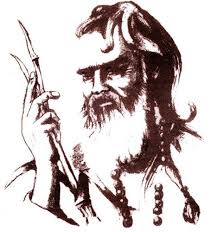
Ghiyas al-Din Abu al-Fath Omar ibn Ibrahim Khayyam Nishapuri (May 18, 1048 – December 4, 1131), renowned throughout the world very long ago, entered human history as a brilliant astronomer, mathematician, philosopher, and unrivaled master of rubaiyat. Omar Khayyam's twenty treatises on various fields of knowledge were famous for centuries in the medieval Muslim East, and thanks to their depth and innovation they constantly remained at the center of attention, positively influencing the development of astronomy, algebra, geometry, mineralogy, philosophy, and other sciences. Notwithstanding he was recognized and considered a great scholar in the East, the 1859 translation and publication of 100 of Khayyam's rubaiyat by the English explorer and poet Edward FitzGerald (1809–1883) quickly made him a favorite of Europe and America, and soon earned him international popularity as a poet rather than a scholar. Due to this sudden rise to fame Omar Khayyam is currently the most translated oriental poet into all the languages of the world.
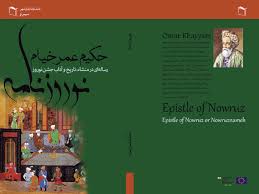
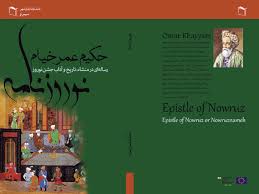
Khayyam's rubaiyat have been translated into Azerbaijani by poets of diverse generations in both South and North Azerbaijan. Among these translations, those by Mikayil Mushfig, Mirmehdi Seyidzada, and Akram Jafar have enjoyed the greatest popularity. Although Omar Khayyam's rubaiyat were repeatedly published in Azerbaijan throughout the 20th and early 21st centuries, unfortunately, his other valuable works in Persian and Arabic remain untranslated into Azerbaijani. One of the works attributed to Khayyam is "Nowruznama," dedicated to the history and traditions of the Nowruz holiday, and also reflecting a number of interesting details related to the science of life, adorned with captivating stories. Until now, this work has not been presented to Azerbaijani readers in a translation into our native language. We translated this work into our native language and wrote an extensive preface for it, examining the issues of the historicity of the work and its other merits.