Poetry of the Umayyad period (661–750) occupies a distinguished position in the history of Arabic literature owing to its considerable historical and ideological significance. It reflects the political conflicts of the age, the processes of conquest and expansion, as well as the profound social and cultural transformations that accompanied the consolidation of Umayyad rule.
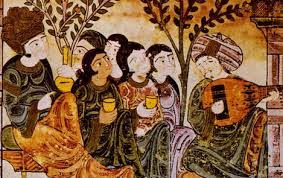
The poetic corpus of this period offers extensive depictions of rivalries among political factions alongside portrayals of the lifestyle, leisure practices, and cultural tastes of the aristocratic elite.
Among the most authoritative sources for the study of Umayyad literary and cultural life is Abū al-Faraj al-Iṣfahānī’s Kitāb al-Aghānī, which preserves invaluable material on the social milieu of the period and, in particular, provides rare and significant information concerning the lives and creative output of women poets.
Drawing upon this seminal anthology, the present article examines a number of women poets and musicians active during the Umayyad era. Special attention is devoted to the biographies and literary legacies of Nāʾila bint al-Farāfiṣa, Laylā al-Akhyaliyya, and Jamīla al-Sulamiyya, with selected specimens of their poetic production brought into scholarly focus.
The study further demonstrates that the growth of urban culture in the Early Islamic and Umayyad periods, the influence of foreign populations upon indigenous social practices, and the stylistic and aesthetic impact of the Qurʾān collectively contributed to the thematic and formal diversification of Arabic poetry.
Finally, the article considers the principal literary tendencies of the Umayyad period, with particular emphasis on the formal structures and thematic concerns characteristic of its poetic tradition.