Gulnar AGIG JAFARZADE
DOI: https://doi.org/10.30546/209805.2025.101.2.1001
Abstract
Sheikh Farid al-Din Attar Nishapuri played a decisive role in the formation of Sufi poetry, one of the principal directions of classical Eastern literature. The pen name “Attar” is connected with his occupation in his youth as an attar (a pharmacist, herbalist). According to sources, his medical knowledge and close familiarity with people`s sufferings had a profound influence on his worldview, as a result of which he turned from external (exoteric) sciences to inner (esoteric, mystical) knowledge. Attar is among those thinker-artists who expressed the philosophical concepts of Sufism through artistic language. In his works, the perfection of the human being, the discipline of the ego (nafs), attaining truth through the path of love, and renouncing the material world in order to unite with God emerge as the central ideas.
The most famous and ideologically influential of Attar's works is Mantiq al-Tayr (“The Conference of the Birds”). Written in the allegorical masnavi (rhymed couplet) form, this work depicts the journey of a group of birds in search of the Simurgh (a symbol of God or divine truth) and the challenges they meet along the way. The birds pass through seven valleys – Talab (Desire), Ishq (Love), Marifat (Knowledge), Istighna (Self-sufficiency), Tawhid (Unity), Hayrat (Astonishment), and Fana (Annihilation) – only to realize that the Simurgh they were seeking is, in fact, their own selves, having attained perfection. This work is considered a literary manifesto of Sufi philosophy and brought great fame to Attar.
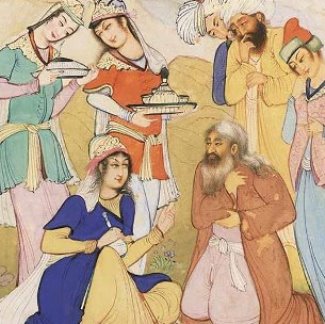
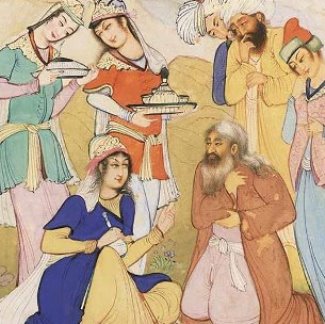
One of the most famous tales in Mantiq al-Tayr is the story of “Sheikh Sanan,” which represents some of the most dramatic episodes of the work. It is mainly associated with the Valley of Love and is a powerful example of the trials and transformations that one undergoes in the pursuit of spiritual enlightenment.
The narrative of “Sheikh Sanan” exposes the tension between outward religiosity and inner spiritual reality. Through this allegorical story, Attar demonstrates that genuine love transcends formal religious norms and external regulations; however, rather than negating faith, such love serves to deepen, transform, and ultimately perfect it. This story gained great fame in later Persian, Turkish and Azerbaijani Sufi literature, many poets in classical Eastern literature have alluded to this theme, and the powerful representative of 20th-century Azerbaijani poetry, Huseyn Javid, wrote a verse play of the same name. Considering the important place this story occupies in Azerbaijani literature, we present to the readers a prose translation into Azerbaijani language of the narration “Sheikh Sanan” consisting of 408 verses.