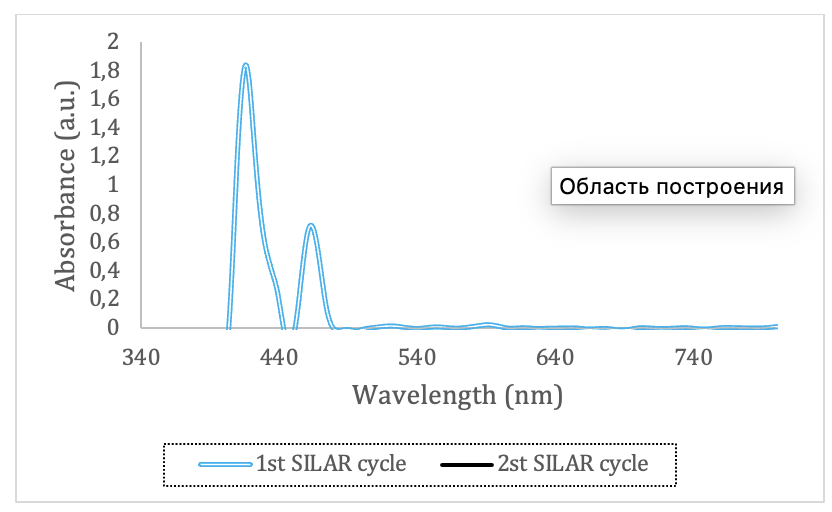
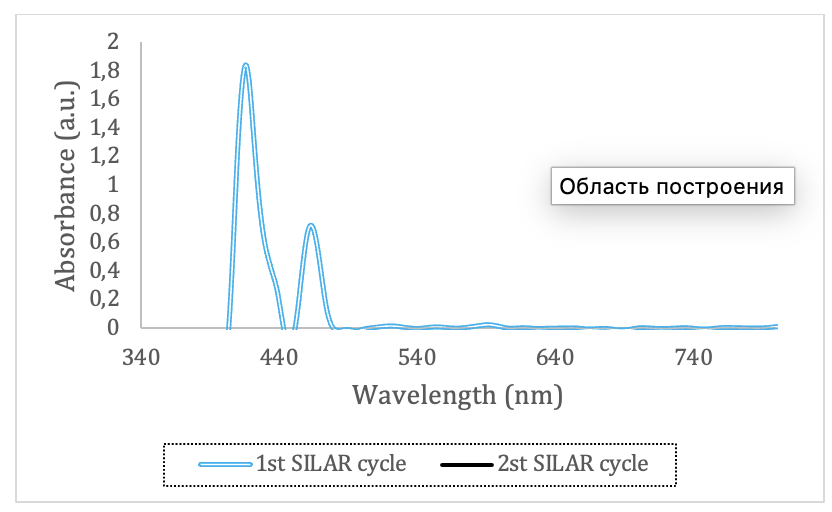
Zinc sulfide (ZnS) is a wide band gap II-VI semiconductor with significant potential for optoelectronic and ultraviolet (UV) sensing applications. In this study, ZnS nanoparticles were synthesized via the Successive Ionic Layer Adsorption and Reaction (SILAR) method using a polymer-derived biochar additive obtained from agricultural waste. The environmentally friendly synthesis route enables controlled nucleation and growth of ZnS nanoparticles through repeated SILAR cycles. Optical properties were investigated by UV-Vis spectroscopy in the wavelength range of 200-900 nm. The absorption spectra reveal strong absorption in the UV region and high transparency in the visible range, indicating the formation of nanoscale ZnS. The optical band gap was estimated from the absorption edge in the UV-Vis spectra, was found to be in the range of 3.7-3.9 eV, which is larger than that of bulk ZnS due to quantum confinement effects. The results demonstrate that biochar plays a key role in improving particle homogeneity and optical performance. The synthesized ZnS nanoparticles show strong potential for application in UV photodetectors, optoelectronic devices and sustainable functional coatings.