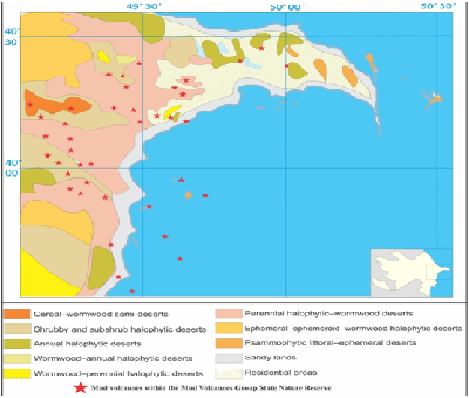
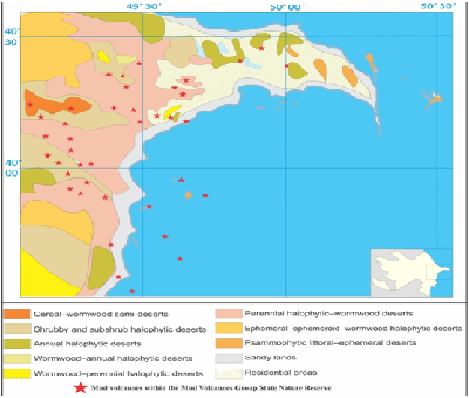
This study provides a comprehensive analysis of vegetation structure and its ecogeographical controls within areas occupied by mud volcanoes included in the Mud Volcanoes Group State Nature Reserve. The research focuses on identifying the key environmental factors shaping vegetation distribution, including soil salinity, moisture availability, climatic conditions, geochemical processes, volcanic activity, and anthropogenic pressure.
Vegetation characteristics of mud volcano landscapes were examined through an integrated approach combining Sentinel-2 satellite imagery, the Normalized Difference Vegetation Index (NDVI), and relevant scientific literature. Plant species composition, spatial distribution patterns, and variations in vegetation density were analyzed across different landscape complexes within the reserve. Particular attention was given to comparing ecogeographical parameters influencing vegetation development in contrasting environmental settings.
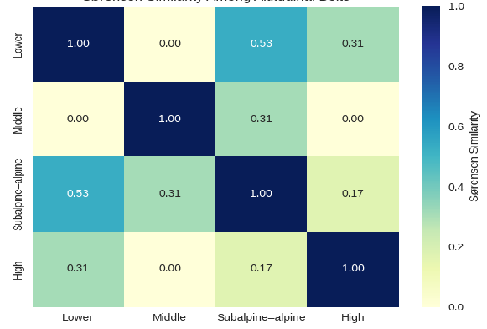
Based on the obtained results, thematic maps, tables, and graphical materials were prepared to illustrate vegetation patterns and ecological differentiation across the study area. The findings highlight the strong dependence of vegetation cover on local environmental conditions and demonstrate the effectiveness of remote sensing data in assessing vegetation dynamics in extreme and fragile mud volcano ecosystems.