Afet Suleymanova, Mehdi Ali, Elvina Rustamova
DOI: https://doi.org/10.30546/300045.2026.03.1.538
Abstract
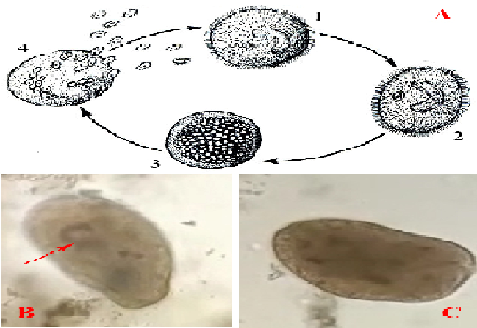
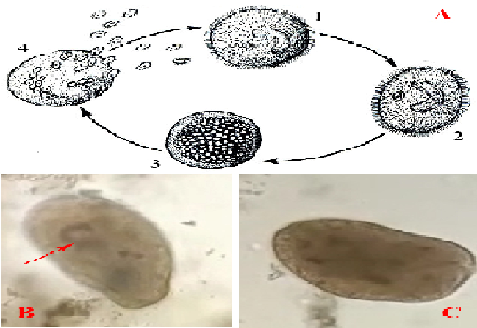
Between 2022 and 2025, parasitological studies were conducted to investigate the prevalence of protozoan diseases in fish farms across Azerbaijan. One of the most significant pathogens identified was Ichthyophthirius multifiliis, a ciliated protozoan that causes ichthyophthiriasis. This parasite mainly infects the skin, fins, gills, eyes, and oral cavity of fish, leading to characteristic clinical signs such as restless behaviour, congregation near water inlets, and the appearance of a distinctive “semolina-like” coating on the body surface. According to our observations, the disease was most severe among juveniles, with mortality rates reaching up to 40%. Epizootics of ichthyophthiriasis were recorded throughout the year, but they occurred most frequently in spring and summer, when water temperatures ranged between 17 °C and 27 °C and stocking densities were high. The average infection rate reached 26.5%. The parasite was detected in various fish species across nearly all rivers and fish farms in Azerbaijan. To prevent the spread of the disease, comprehensive prophylactic measures were implemented, including the use of salt baths. It was recommended to add table salt at a concentration of 0.01% (100 mg/L) until the water density reached 1.002 g/cm³, as well as to use short-term baths in a 3% solution (30 g/L) for 30 seconds to several minutes, or to maintain fish in water with a constant low salt concentration (0.05% = 500 mg/L).