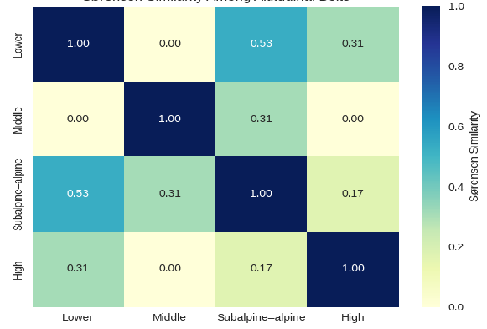
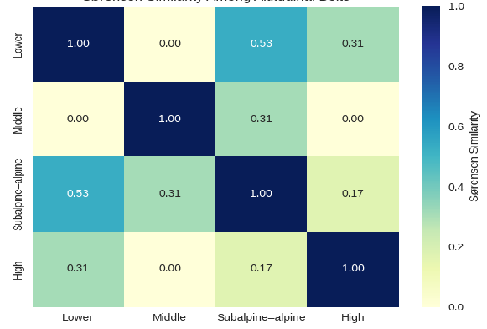
Understanding the bioecological characteristics of plant species is essential for both systematics and conservation planning. Here we analyze the ecological responses of 16 species of the subgenus Campanula distributed in Azerbaijan and assess their differentiation along elevation gradients. Field surveys across multiple regions and elevation zones were combined with herbarium evidence and authoritative taxonomic databases to verify identifications. Species were classified into ecological groups by light, water, and substrate preferences, and their presence across altitudinal belts was summarized. Similarity in species composition among belts was quantified using the Sorensen–Czekanowski coefficient. Most species are shade-tolerant with mesophytic water requirements and petrophytic substrate affinities. The lower mountain belt harbors the highest share of species (62.5%), followed by the subalpine–alpine belts (56.25%), the middle mountain belt (25%), and the high mountain belt (18.75%). Pairwise similarity is highest between the lower mountain and subalpine–alpine belts (S = 0.53) and lowest between the middle and high mountain belts (S = 0). These patterns highlight ecological plasticity within Campanula, with several species spanning multiple light and moisture groups and occurring across two or more elevation zones.