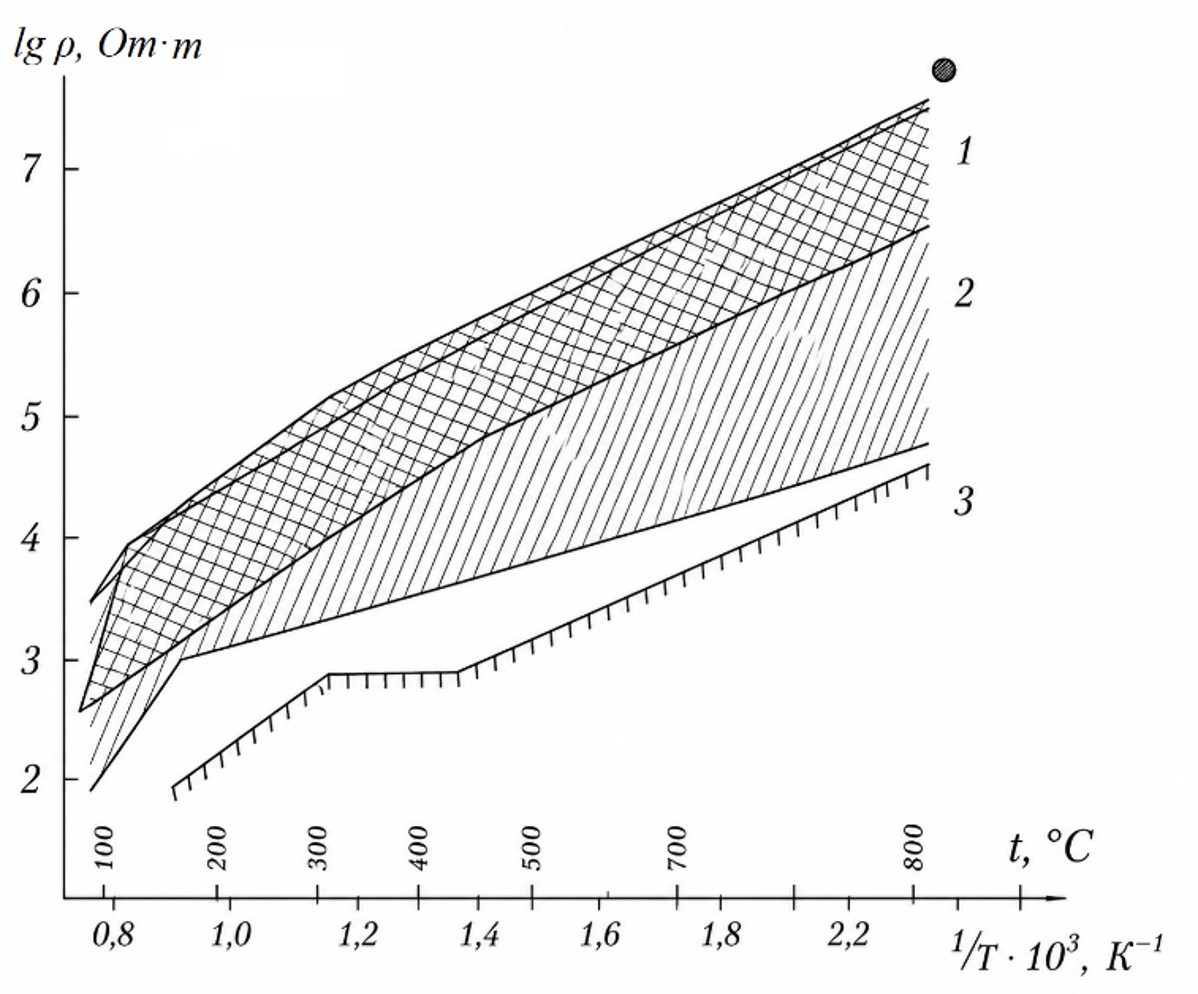
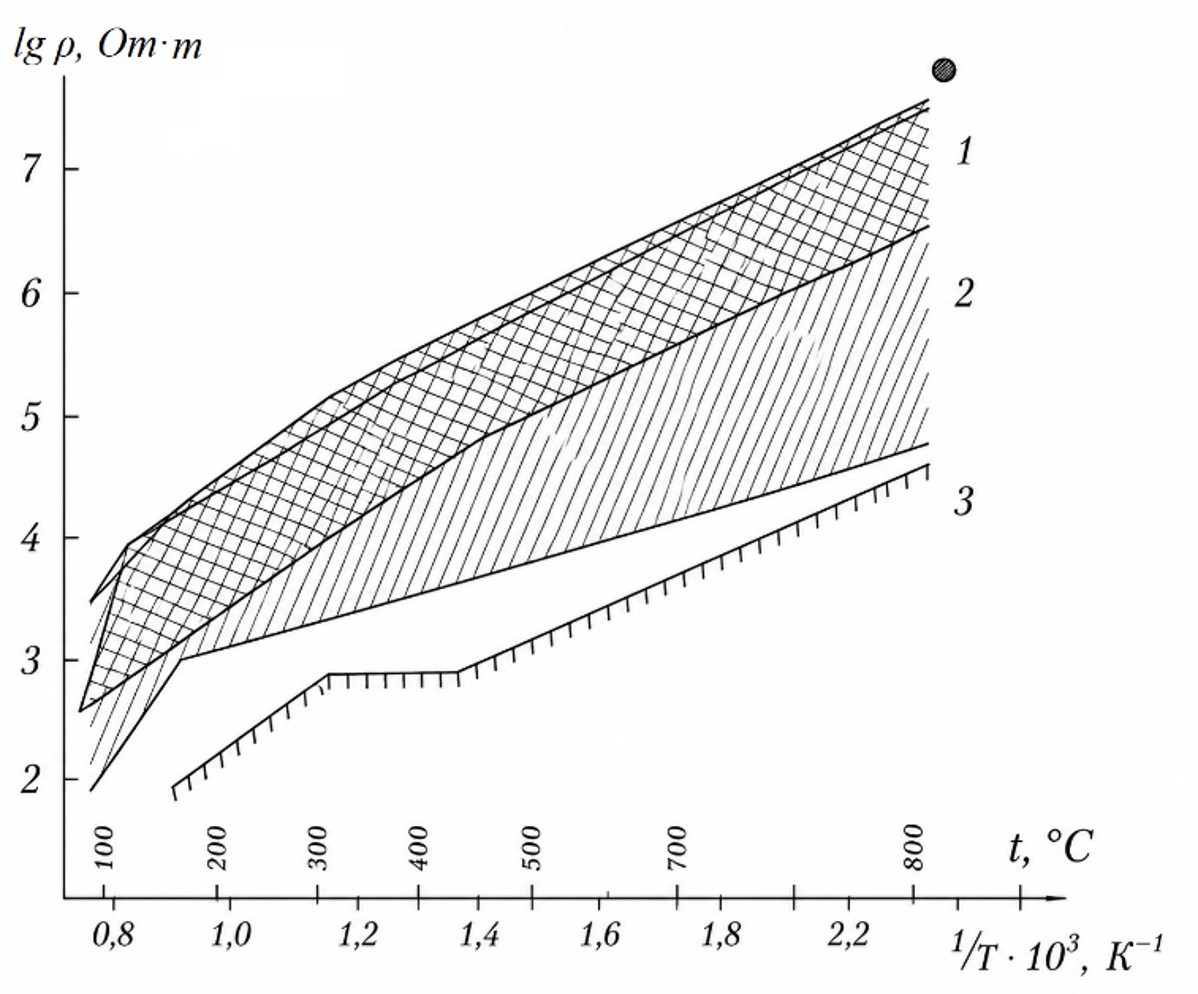
This study investigates the formation of the electrical properties of basaltoids and related igneous rocks from the Talysh structural zone over a wide temperature range (200–1000°C). Laboratory measurements of electrical resistivity were conducted on trachydolerites, trachybasalts, troctolites, and peridotite to determine the influence of mineral composition, structure, and temperature on electrical conductivity. The results show that resistivity is primarily controlled by the abundance and distribution of ore minerals (magnetite and titanomagnetite) and high-resistivity minerals such as olivine. Troctolites exhibit the lowest resistivity values due to their higher content of conductive ore minerals, whereas olivine-rich rocks display higher resistivity. Resistivity anomalies observed between 550 and 800°C are associated with the dehydration of micas, serpentine, and prehnite, causing significant changes in conductivity. Analysis of activation energy values indicates that extrinsic conductivity dominates below approximately 600°C, while intrinsic conductivity becomes predominant above 800°C. Comparison with continental basalts from other regions demonstrates that Talysh basalts are characterized by relatively high resistivity and a narrow resistivity range, attributed to their distinctive mineral composition and the isolated distribution of conductive ore minerals. These findings improve understanding of the electrical behavior of igneous rocks under high-temperature conditions and contribute to the interpretation of geophysical data related to the Earth's crust and upper mantle.