Tarana H. Tahmazova; Firuza Z. Mehdizadeh
DOI: https://doi.org/10.30546/209805.2026.3.1.2049
Abstract
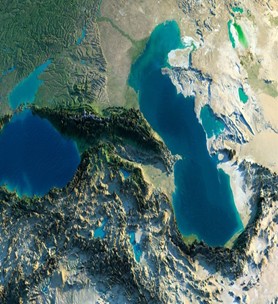
This article presents an integrated analysis of existing hypotheses on the formation and distribution of the hydrocarbon potential of the South Caspian Basin. The basin is characterized by high tectonic complexity, extreme thickness of the sedimentary cover, active geodynamic processes, and significant oil and gas reserves. Despite a long history of research and active development of the region, the mechanisms of basin formation and patterns of hydrocarbon distribution remain controversial and ambiguous. Various hypotheses for the basin's origin are considered, including models of rift development, back-arc and residual ocean basins, as well as scenarios of collisional and post-collisional geodynamics. Each of them assumes specific mechanisms of sedimentary cover formation, thermal regime, generation, migration, and accumulation of hydrocarbons, which directly affects the assessment of their potential and spatial distribution. Particular attention is paid to the multifactorial nature of the processes determining the oil and gas potential of the region, caused by the interaction of tectonics, lithological and stratigraphic features, geochemical factors, thermobaric conditions, and fluid dynamics. The analysis aims to systematize and critically evaluate the hypotheses of the formation of the South Caspian Basin with the identification of key factors controlling the distribution of hydrocarbon resources.