Ruslan I. Malikov; Gulam R. Babayev
DOI: https://doi.org/10.30546/209805.2026.3.1.2024
Abstract
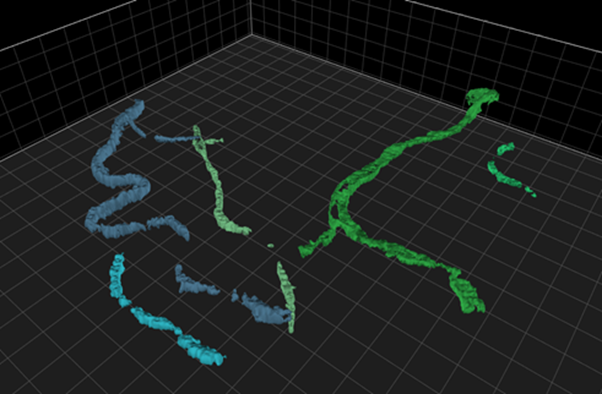
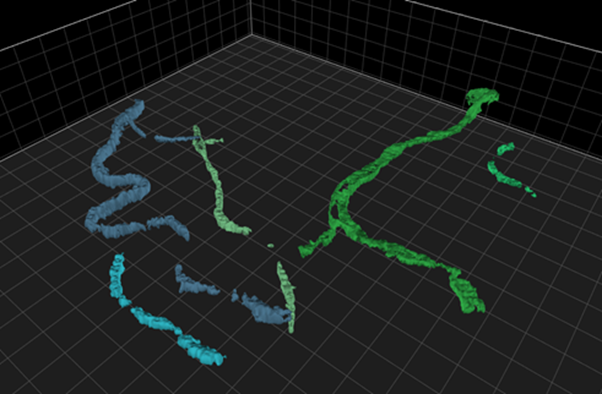
Seismic facies analysis is a fundamental component of subsurface characterization, offering valuable insights into depositional environments, stratigraphic frameworks, and reservoir heterogeneity. Tradi-tional methods primarily rely on amplitude-based seismic attributes and manual frequency blending, often struggle to detect subtle geological variations in complex depositional settings and are prone to interpreter subjectivity. This study presents an integrated workflow for three-dimensional seismic facies clustering that combines spectral decomposition with unsupervised machine learning to automate the classification of subsurface features. The method utilizes the Continuous Wavelet Transform (CWT) to break down seismic data into a wide spectrum of frequencies, enabling the identification of geological features at multiple scales. These multi-frequency attributes are subsequently clustered using Self-Organizing Maps (SOM), which project high-dimensional data onto a two-dimensional neuron grid while preserving topological relationships. Applying the trained SOM model volumetrically allows the extrac-tion of 3D geobodies, which are then visualized using a 2D color map for interpretation. The methodology is demonstrated on datasets from the South Caspian Basin, successfully delineating meandering chan-nels, levees, and stratigraphic boundaries. This workflow reduces interpreter bias, improves reproduci-bility, and enables volumetric facies modeling, offering substantial benefits for reservoir characteriza-tion, hydrocarbon exploration, and reserves estimation.