BAKU STATE UNIVERSITY JOURNAL of
PROBLEMS OF MEDIA
FIRST TURCOLOGY CONGRESS – 100: COMMON LITERARY LANGUAGE AS MEDIA DISCOURSE FROM YESTERDAY TO THE PRESENT
Received: 04-Feb-2026 Accepted: 10-Feb-2026 Published: 07-Apr-2026 Read PDFDownload PDF
Gulu MUHARRAMLI
DOI:
Abstract
Although there were no problems with correspondence, communication, and understanding between the Turkic peoples before the Russian occupation, certain difficulties began to manifest themselves in this area from the middle of the 19th century.
Reflecting these difficulties on its pages, the newspaper “Terjuman” brought the issue of language unity among the Turkic peoples to the agenda at that time. The Soviet authorities that overthrew tsarism discussed the issue of a common language for all Turks,
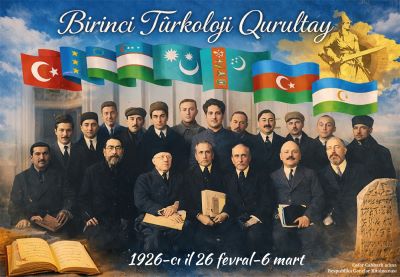
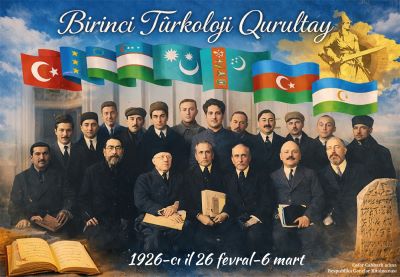
along with a number of ethnocultural problems, at the First Turkological Congress convened in Baku in the first years of its existence.
The article examines the conceptual scientific and ideological directions of those
discussions, and analyzes the sociolinguistic approaches of prominent scholars to the
problem. Approaching the issue of “common literary language” as a media discourse,
the author also considers it as the concept of “unified language of communication”. İn
his opinion, the emergence of the “Turkish” factor in the new world order formed in the
years following the First Turkological Congress, especially at the beginning of the 21st
century, along with new political and economic realities, has also made the problem of
a “common language” for easy communication relevant. Now the main issue is that approximately 180 million people of Turkic origin living in different geographies should
communicate easily in a single common language.
This formulation of the problem raises many questions, and these questions are
examined in the presented article from a historical-social and linguistic perspective,
providing information about the essence, history, and different approaches to the problem. How to solve the problem of a common language between similar lineages is explained in terms of historical experience