Nuray Guluzade; Ofeliya Balayeva
DOI: https://doi.org/10.30546/209501.201.2026.03.002.226
Abstract
In the research work, graphene oxide (GO) was initially synthesized by
Hummers’method, and GO/ZnAl-LDH samples were prepared with different concentrations
(50 mL, 25 mL, 12.5 mL, and 5 mL) of pre-synthesized ZnAl-LDH nanocomposite. The
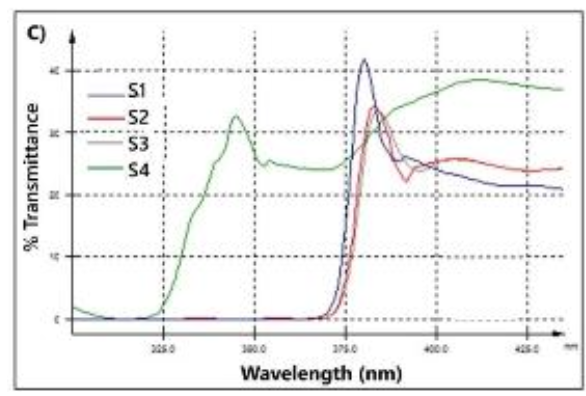
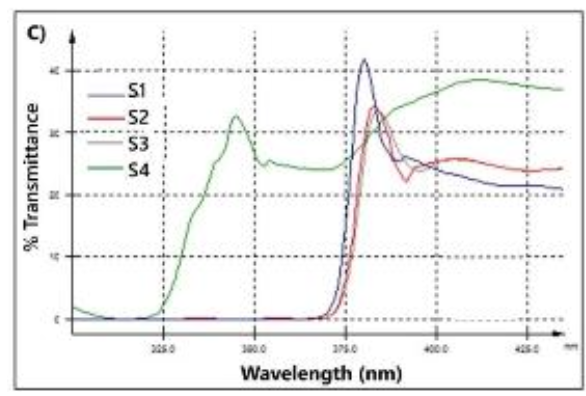
samples were measured by ultraviolet-visible (UV-Vis) spectroscopy, and the band gap width
was calculated for each sample. The crystal structure of GO/ZnAl-LDH samples was
confirmed by X-ray diffraction (XRD). Methylene blue (MB) and Congo red (CR) solutions were
prepared with the GO/ZnAL-LDH composite. After the prepared solutions were stored for 24
hours, the adsorption process was initially studied for methylene blue, and in the next stage,
the photodegradation process was carried out under ordinary lamp light for 2, 4, and 6 hours.
The sorption and photodegradation rates, as well as the rate constants, were calculated for
each sample. The strongest photodegradation for methylene blue samples was observed in
sample 1, and for Congo red in sample 4. Based on the results, we can note that the removal
of Congo red was faster and more efficient than that of methylene blue. This is explained by
the fact that Congo red is an anionic dye, as it forms a strong electrostatic interaction with the
positive charges of the ZnAl-LDH nanocomposite.