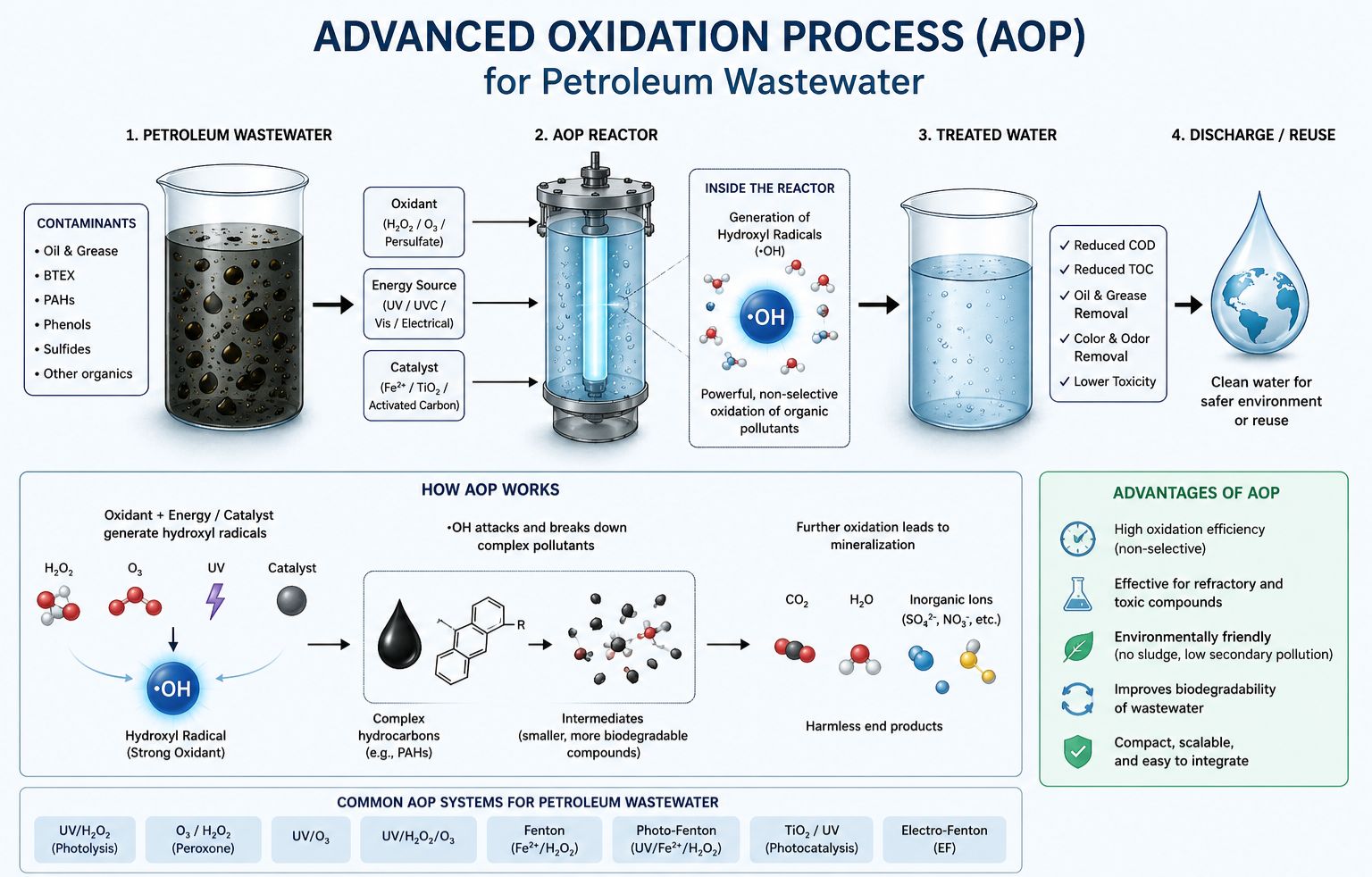
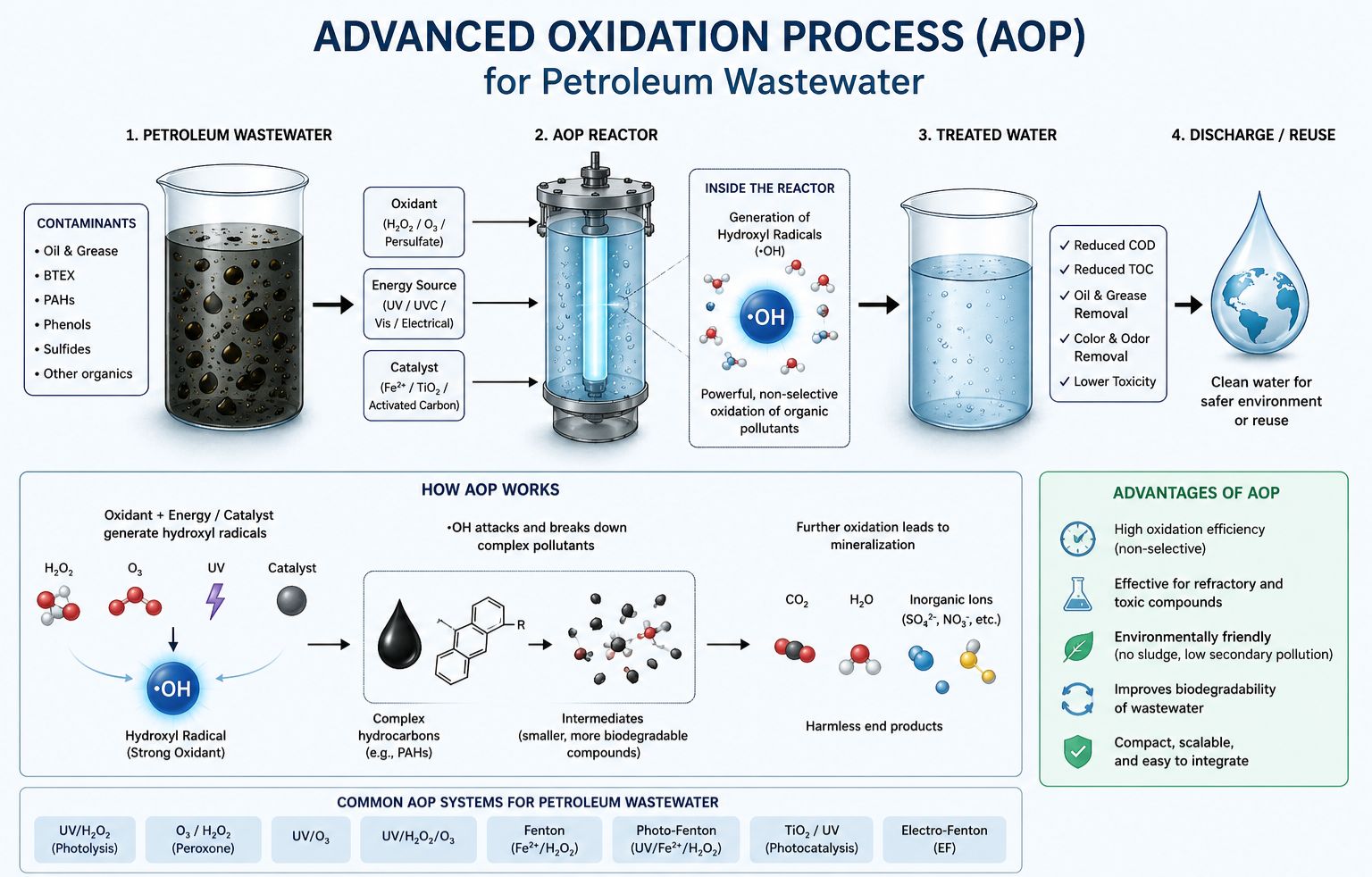
Advanced oxidation processes (AOPs) have attracted considerable attention in recent
years for the treatment of petroleum refinery wastewater, mainly because of their ability to
degrade persistent organic pollutants. Despite this, their practical application at an industrial
scale remains limited. This review discusses the main factors that restrict the performance of
AOPs in real wastewater systems. Particular emphasis is placed on the effects of wastewater
composition, including radical scavenging, variability of the matrix, and the presence of
complex organic and inorganic constituents. In addition, issues such as incomplete
mineralization and the formation of potentially toxic by-products are highlighted. Operational
challenges, including high energy and chemical consumption, pH sensitivity, and catalyst-
related limitations, are also addressed. While combining AOPs with other treatment methods
can improve overall efficiency, such approaches often increase process complexity and cost.
Overall, further research is needed to better understand process behaviour under real
conditions and to support the development of more practical and scalable treatment strategies.