Aykhan Aliyev; Aynura Karimova
DOI: https://doi.org/10.30546/209501.201.2026.03.002.207
Abstract
Nanodrug delivery systems have become an important and rapidly developing area of
research because they can improve the delivery, stability, and safety of therapeutic agents.
Conventional drug delivery methods often have several limitations, such as poor drug
solubility, low bioavailability, rapid degradation, non-specific distribution, and undesirable side
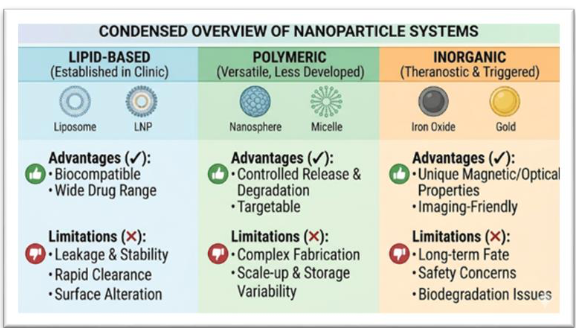
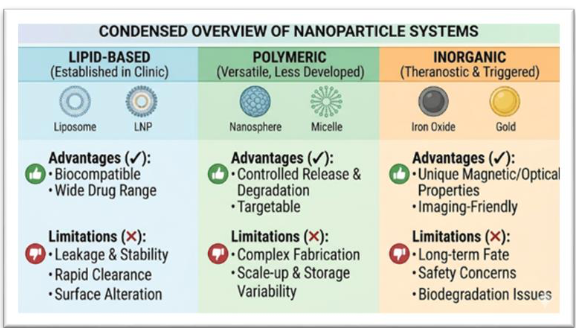
effects. To address these problems, different nanocarriers, including lipid-based, polymeric,
protein-based, and inorganic systems, have been developed. These systems can enhance
drug accumulation at disease sites, reduce systemic toxicity, and support controlled or
targeted drug release, making them attractive tools for more effective therapy.
However, the clinical translation of nanodrug delivery systems remains uneven. While
some nanoformulations have successfully entered clinical practice, many promising
nanosystems still face important challenges that prevent their widespread medical application.
These challenges include the complexity of biological environments, limited targeting
efficiency in vivo, difficulties in large-scale and reproducible production, safety concerns, and
regulatory uncertainties. As a result, the gap between laboratory success and clinical
performance remains a major issue in this field.
This review focuses on that central contrast: nanocarriers offer clear pharmacological
advantages, but these benefits do not always translate into reliable clinical outcomes. The
paper compares the main advantages of nanodrug carriers with the key barriers limiting their
clinical use. It also discusses passive and active targeting, stimuli-responsive release, protein
corona formation, and the current translational landscape. In this way, the review aims to
provide a balanced understanding of why nanodrug delivery systems are so promising, while
also highlighting why their path to the clinic remains challenging.