BAKU STATE UNIVERSITY JOURNAL of
LIFE SCIENCES & BIOLOGY
ISSN: 3006-7065 (ONLINE);
ECO-FRIENDLY SYNTHESIS AND CHARACTERIZATION OF SILVER NANOPARTICLES MEDIATED BY THERMOPHILIC BACILLUS SP. B1
Received: 16-Apr-2026 Accepted: 01-Jun-2026 Published: 30-Jun-2026 Read PDFDownload PDF
Gunay Abbasli
DOI: https://doi.org/10.30546/300045.2026.3.01.27
Abstract
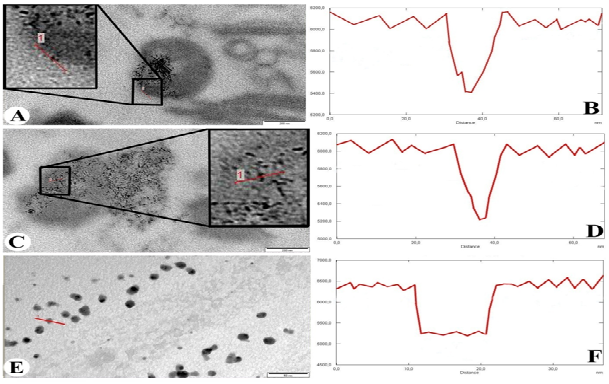
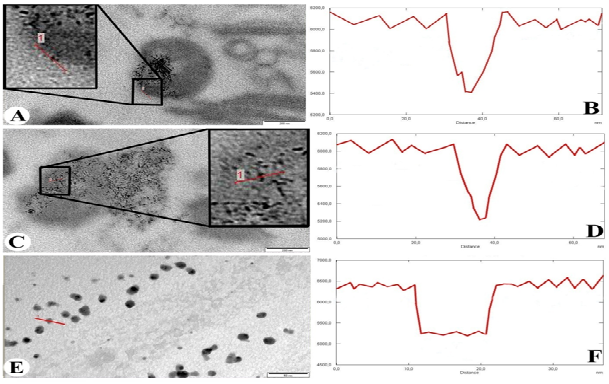
The biological synthesis of silver nanoparticles is considered a green approach to nanoparticle fabrication that is both economical and environment-friendly and thus has been attracting considerable attention in recent years. In this study, the silver nanoparticles produced by the thermophilic bacterium Bacillus sp. B1 were characterized. According to the UV-Vis findings, there was a clear absorption peak at 421 nm, indicating the production of silver nanoparticles. The XRD findings showed that the silver nanoparticles were crystalline with diffraction peaks of metallic silver. Fourier transform infrared (FTIR) analysis identified the presence of organic molecules, including proteins and hydroxyl containing compounds, involved in the reduction and stabilization of the nanoparticles. The silver nanoparticles were analyzed using TEM. These were seen to concentrate in the bacterial cell, cell membrane, and were further isolated for analysis in the form of free particles. The size of the particles ranged from 11 to 13 nm with a predominance of oval-shaped particles. The intensity of color was found to be within the 5200–5400 range, indicating that the particles had metallic properties. In summary, the results of the research demonstrate that thermophilic bacteria can be used successfully for the biosynthesis of silver nanoparticles.