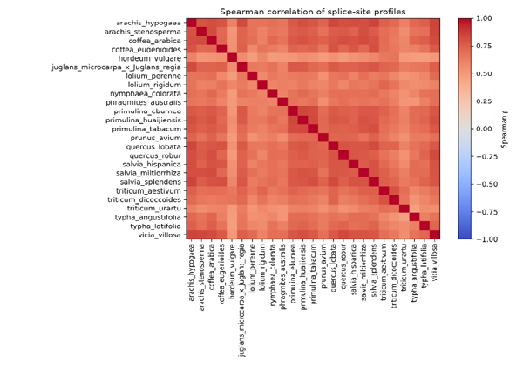
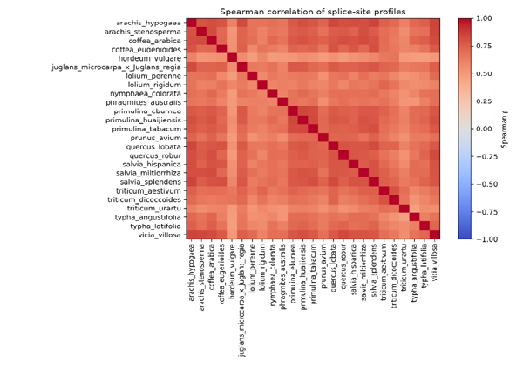
Alternative splicing is a fundamental mechanism that contributes to transcriptome and proteome diversity in eukaryotes. While canonical GT–AG splice sites have been extensively studied, non-canonical splice site combinations remain less understood, particularly in plants. Most research has focused on model organisms or major crops, leaving many plant lineages insufficiently characterized. Here, we present a comparative analysis of splice site usage across 13 plant species representing diverse taxonomic groups. Using high-quality RefSeq annotations, we extracted all introns located within coding regions and quantified the frequency and diversity of canonical and non-canonical splice sites. Normalization of intron counts revealed that the relative proportions of non-canonical classes remain stable across well-annotated genomes, whereas their diversity scales with the total intron number. These findings highlight the evolutionary persistence of non-canonical splicing and provide new insights into splice site variability in plants, broadening the current view of splicing beyond model and agronomically important species.