BAKU STATE UNIVERSITY JOURNAL of
EARTH SCIENCES & ENVIRONMENT
ISSN: 3006-8703 (ONLINE);
MODE OF OCCURRENCE, MORPHOLOGY AND FORMATION MECHANISM OF PYRITE DEPOSITS OF THE FILIZCHAY FIELD
Received: 14-Jul-2025 Accepted: 15-Aug-2025 Published: 12-Dec-2025 Read PDFDownload PDF
Nigar A. Sattar-zade
DOI:
Abstract
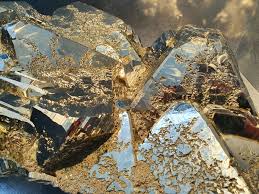
This article examines the occurrence conditions, morphology and formation mechanism of massive sul-fide deposits at the Filizchay deposit. This paper draws on innovative data. It has been established that this deposit is characterized by a minor role of oxidation processes, likely due to intense erosion in the pronounced alpine relief. The proportion of oxidized ores developed in the upper part ("head") of the ore deposit is insignificant, amounting to 0.5% of the total ore mass. Of particular interest, although rare, are the compressed banding patterns, which take the form of microfolds caused by shearing and dragging in the layered host rocks. A characteristic component of these ores are fragments of completely chloritized host rocks, usually localized at the margins of the bodies. Fragments of quartz veinlets are less charac-teristic. The Filizchay deposit, like other deposits associated with basaltic volcanism, is a combination of formations and is formed by components transported by hydrothermal flows and associated with un-derwater alteration of basalts (palagonitization).