BAKU STATE UNIVERSITY JOURNAL of
PHYSICS & SPACE SCIENCES
ISSN: 3006-6123 (ONLINE);
Mixed-halide perovskites for optoelectronics: a comparative study of CH₃NH₃PbICl₂ and CH3NH3SnICl2 thin films
Received: 20-Dec-2025 Accepted: 03-Feb-2026 Published: 16-Mar-2026 Read PDFDownload PDF
Sevinj G. Nuriyeva; Maarif A. Jafarov; Aynura H. Karimova; Fidan I. Novruzlu
DOI:
Abstract
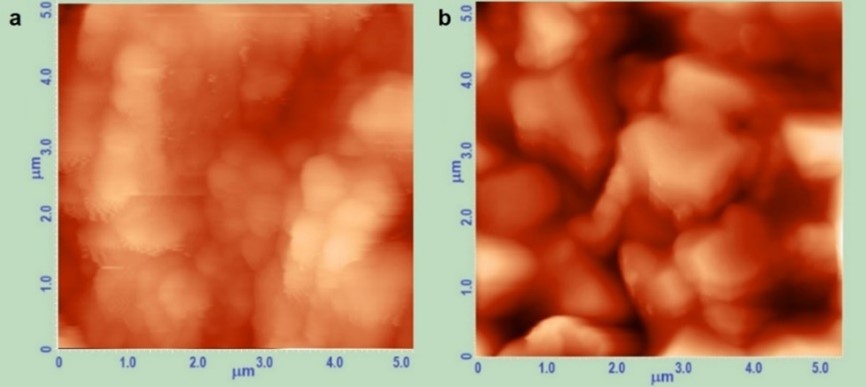
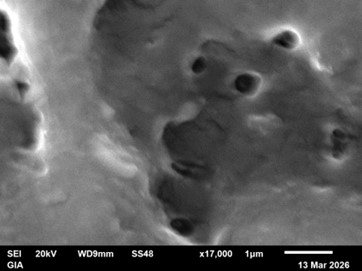
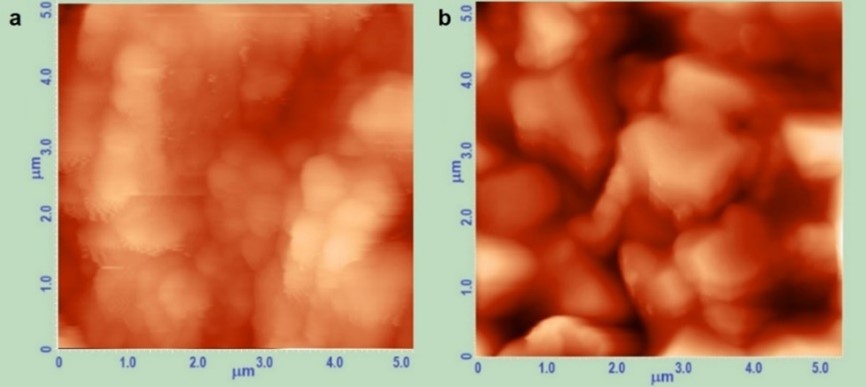
In this study, mixed-halide perovskite thin films of methylammonium lead iodide chlo-ride (CH₃NH₃PbICl₂) and methylammonium tin iodide chloride (CH₃NH₃SnICl₂) were fabricated using the doctor-blade coating technique and systematically investigated to evaluate the influence of partial chloride incorporation on their structural and optical properties. X-ray diffraction (XRD) and atomic force microscopy (AFM) analyses con-firmed improved crystallinity and increased grain size in both materials. CH₃NH₃SnICl₂ films exhibited smoother surface morphology and higher phase purity, while CH₃NH₃PbICl₂ showed minor secondary phases such as PbI₂ and PbCl₂. Fourier-transform infrared (FTIR) spectra revealed characteristic vibrational modes of the me-thylammonium (CH₃NH₃⁺) cation, with slight shifts indicating lattice modifications due to Cl⁻ substitution. UV–Vis absorption spectra showed absorption edges near 760 nm (Eg ≈ 1.54 eV) and 830 nm (Eg ≈ 1.55 eV) for CH₃NH₃PbICl₂ and CH₃NH₃SnICl₂, respec-tively. Photoluminescence spectra exhibited strong emissions at ~750 nm and ~820 nm, suggesting reduced defect density and efficient radiative recombination. These findings highlight mixed-halide perovskites as promising materials for stable optoelectronic ap-plications.