BAKU STATE UNIVERSITY JOURNAL of
CHEMISTRY & MATERIALS SCIENCE
ISSN: 3006-7073 (ONLINE);
APPLICATION OF ECOLOGICALLY ORIENTED PROJECTS IN CHEMISTRY LESSONS AND THE FORMATION OF STUDENTS’ SUSTAINABLE DEVELOPMENT THINKING
Received: 02-Sep-2025 Accepted: 30-Oct-2025 Published: 31-Oct-2025 Read PDFDownload PDF
Aynura Tomuyeva; Nurana Hasanova
DOI:
Abstract
The integration of ecologically oriented projects into chemistry lessons has emerged as a modern pedagogical approach that fosters not only subject-based knowledge but also students’ sustainable development thinking. In today’s educational landscape, where environmental issues are becoming increasingly urgent, the use of project-based learning provides students with opportunities to connect theoretical knowledge with real-life ecological challenges. By engaging in projects related to waste management, recycling, renewable energy, and green chemistry practices, learners develop the ability to apply classroom concepts in meaningful and socially valuable contexts. This approach strengthens students’ critical and creative thinking, improves their problem-solving skills, and encourages collaboration and communication. Unlike traditional methods, project-based learning motivates learners by linking chemical knowledge to environmental issues that directly impact their communities. As a result, students not only achieve a deeper understanding of chemistry but also cultivate ecological responsibility and awareness of global sustainability challenges.
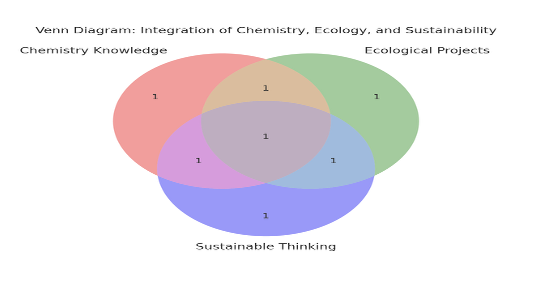
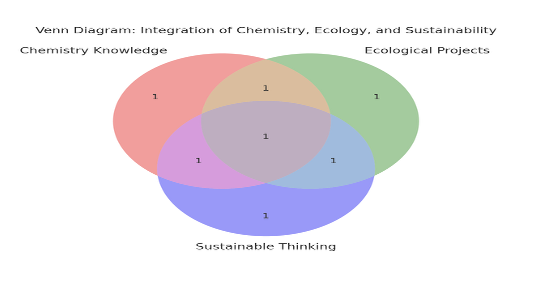
Moreover, ecologically oriented projects promote interdisciplinary connections by integrating chemistry with biology, geography, and environmental science, thereby providing a holistic learning experience. Such practices enhance students’ engagement, foster eco-literacy, and contribute to shaping active citizens capable of addressing complex environmental problems. The findings highlight that the implementation of ecologically oriented projects in chemistry lessons can serve as an effective strategy to prepare students for both academic success and responsible participation in sustainable development. This study underscores the need to strengthen eco-project practices in school curricula as a key element of modern chemistry education.